Skip to content
A kinder, more informed world for cats
Global resource ⌄English
Catopedia.CATS CONNECT. CATS CONNECT US

CAT BREED PROFILE

Australian Mist

Australia’s softly misted, people-centered pedigree cat

The Australian Mist is a moderate, shorthaired breed created in Australia from Burmese, Abyssinian and domestic-cat foundations. Its defining pattern layers spots or marbling over delicate ticking, producing the misted effect reflected in the name. The breed is designed as a balanced companion rather than an extreme type and is recognized by TICA and GCCF.

Evidence-aware guidanceIndividual cats varyPronounced aw-STRAY-lee-un MIST
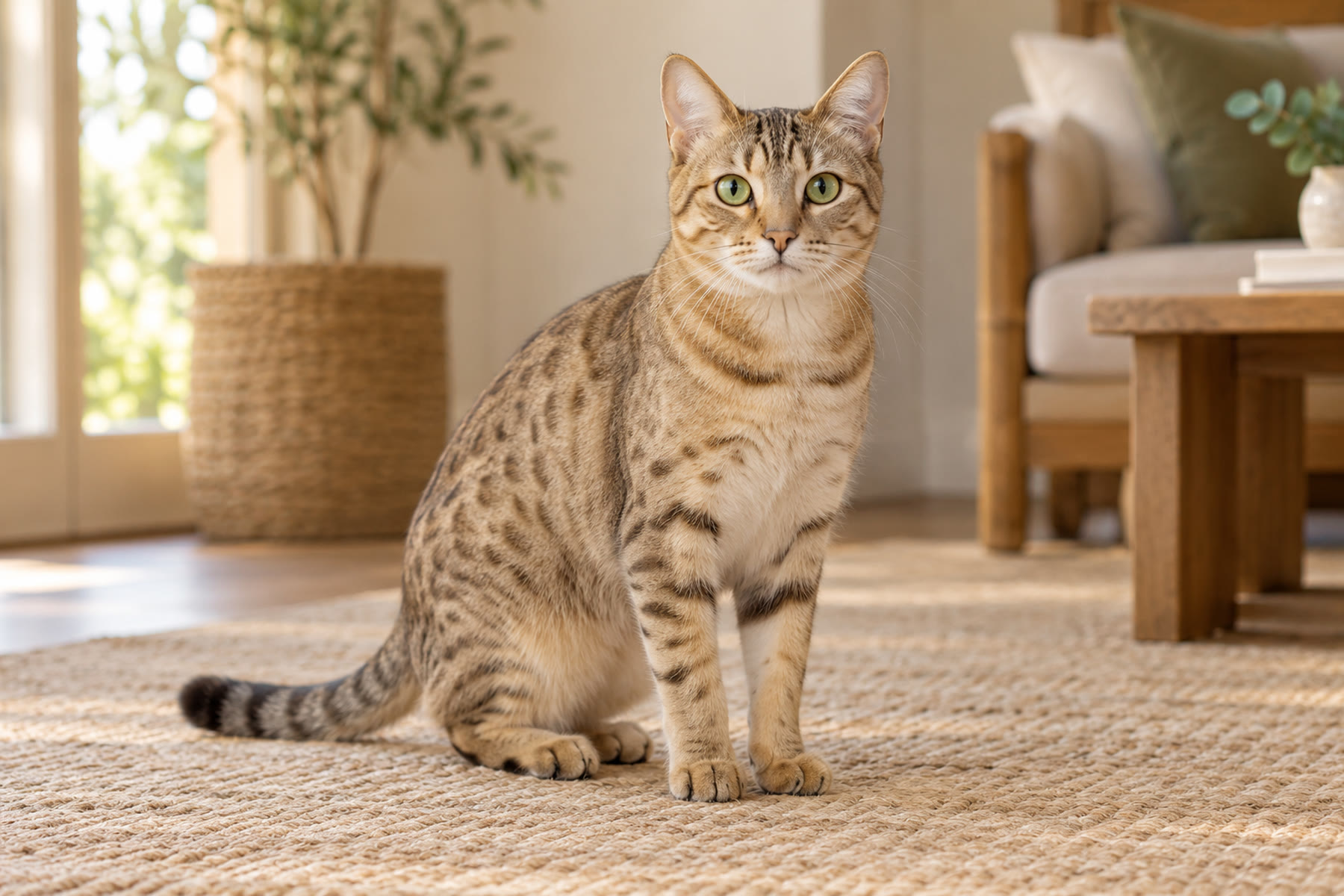
Australian Mist cat breed

01

BREED OVERVIEW

Understanding the Australian Mist

The Australian Mist is a moderate, shorthaired breed created in Australia from Burmese, Abyssinian and domestic-cat foundations. Its defining pattern layers spots or marbling over delicate ticking, producing the misted effect reflected in the name. The breed is designed as a balanced companion rather than an extreme type and is recognized by TICA and GCCF.

A breed profile describes a population, not a fixed personality or medical destiny. Ethical selection starts with the individual cat’s welfare, documented background and suitability for the home. Registry standards describe exhibition ideals; they do not rank one cat’s value as a companion.

Lifespan12–16 years
Typical weightMale 4 kg–7.7 kg · Female 3.2 kg–5.4 kg
Height23 cm–30 cm
Temperamentengaged, intelligent, adaptable, people-oriented
GroomingWeekly
SheddingModerate
OriginAustralia
SizeMedium
CoatShort

02

AT A GLANCE

Traits, lifestyle and household fit

Affection
4/5
Activity
3/5
Intelligence
4/5
Playfulness
4/5
Vocalization
3/5
Grooming needs
2/5
Shedding
3/5
Children
4/5
Other cats
4/5
Dogs
3/5
Strangers
3/5
Independence
3/5
Apartment living
4/5
First-time owners
4/5

May be a good match for

The Australian Mist can be a rewarding match for people who appreciate companionship balanced with choice and predictable routine. The strongest homes evaluate an individual cat rather than purchasing from a photograph or a list of generalized traits. Ask about the cat’s actual behavior, handling history, recovery after change, play preferences and experience with children or other animals. A household should have time for daily interaction, preventive veterinary care, species-appropriate food, play and environmental choice.
May not suit

This breed label is not a promise of compatibility. A Australian Mist may not suit a home that expects a decorative, maintenance-free pet or cannot provide safe indoor territory, veterinary care and regular engagement. Kittens of any breed can be demanding, and adults may have established preferences. Allergy claims should be treated skeptically: no cat breed is reliably hypoallergenic for every person.

Time alone

Time alone depends on age, health, prior experience and the individual. Build predictable departures, accessible water, clean litter boxes, resting sites and safe enrichment into the day. A camera can reveal pacing or distress but does not replace a behavior assessment. Sudden vocalizing, elimination changes, hiding or destructive behavior deserves investigation, including veterinary evaluation when it is new.

Indoor living

A well-designed indoor home can support the Australian Mist very well. Think in three dimensions: sturdy climbing routes, high resting places, hiding options, window views, scratching surfaces and more than one path through important rooms. Supervised outdoor access, a secure catio or harness training can add variety without the risks of roaming. Microchipping remains important even for indoor cats.

Climate considerations

The short coat changes how weather is experienced, but body condition, age and health matter just as much. Provide cool shaded rooms and fresh water during heat, warm draft-free beds during cold periods, and never assume ancestry makes extreme weather safe. Panting, weakness, disorientation, persistent shivering or cold extremities require prompt professional advice.

03

Appearance and breed characteristics

Overall appearance

The Australian Mist should look balanced and able to move freely. Breed hallmarks are most meaningful when seen together rather than reduced to one feature. Sound legs, an unobstructed airway, normal eyelids and comfortable movement are welfare essentials. Extreme size, head shape or coat should never be treated as an improvement.

Body and build

The body reflects the Australian Mist standard: proportion, muscle and bone create the characteristic silhouette without obesity. Sex, neuter status and family line influence mature size. Growth charts and body-condition assessment are more useful than chasing a headline weight.

Head and facial features

Head shape is distinctive but remains fully feline and functional. The muzzle should permit normal eating and breathing, and the bite should be comfortable. Photographs taken with wide-angle lenses can exaggerate proportions, so buyers should assess cats in person or through live video.

Eyes

Eye color and shape vary within the applicable standard and coat color. Clear, comfortable eyes matter more than intensity of color. Squinting, discharge, cloudiness or sudden asymmetry should be evaluated promptly.

Ears

Ears should be clean, mobile and proportionate to the head. Tufts may contribute to the breed expression in some Australian Mists, but they are cosmetic. Odor, redness or repeated head shaking is not normal breed behavior.

Coat

The Short coat has a breed-characteristic texture and density. Condition changes with season, nutrition, health and grooming. A glossy show coat cannot demonstrate freedom from internal disease, and shaving is not a routine solution for shedding.

Colors

Recognized colors include brown, blue, chocolate, lilac, caramel, gold and peach in spotted or marbled patterns, subject to registry rules. Exact terminology and eligibility differ among CFA, TICA, GCCF and FIFe, so consult the current standard when exhibition or registration matters. Color is not a health certificate.

Patterns

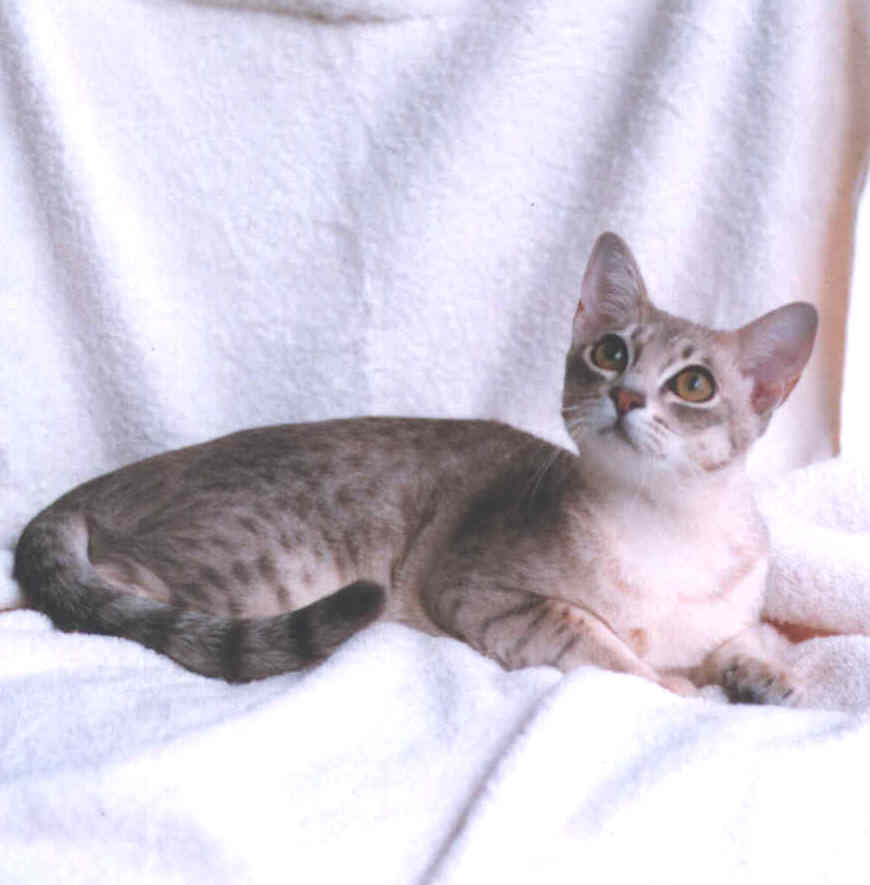
Spotted and marbled tabby patterns are overlaid by ticking that softens the contrast into a characteristic misted veil. The result should remain visible and balanced rather than resembling either a plain ticked coat or a sharply outlined Bengal rosette.

Distinguishing features

A warm ground color, delicate pattern and even ticking combine with a moderate, muscular body and expressive green eyes. The “mist” is an interaction of pattern layers, not a single rare-color gene or proof of pedigree by itself.

04

Personality and daily life

Temperament

Australian Mists are often described as intelligent and involved with their people. Some seek lap contact; others prefer to sit nearby or follow household activity. Early socialization, pain, stress and learning history strongly affect behavior. Respect consent signals, give the cat retreat options and avoid forcing interactions to match a stereotype.

Activity and exercise

The Moderate activity description is relative. Kittens typically need frequent play, while adults often settle into predictable peaks around dawn and evening. Use sturdy towers, horizontal running space and games that allow stalking, chasing and catching. Monitor breathing and gait during exertion rather than assuming fatigue is normal for the breed.

Play and enrichment

Alternate wand toys, rolling prey, tunnels, boxes, food puzzles and short training sessions. Allow the cat to watch and plan rather than waving toys continuously at its face. End with a catch and small food reward when appropriate. Store strings securely after play.

Training and intelligence

Positive reinforcement can teach carrier comfort, recall, stationing, grooming cooperation and simple tricks. Begin in a quiet room, reward small approximations and stop before frustration. Punishment risks fear and damages trust; it does not teach the desired alternative.

Social needs

Many Australian Mists value regular human contact, but sociability is not permission for constant handling. Provide predictable connection and independent choices. Introduce children through calm floor-level interactions, and teach them to recognize tail lashing, skin twitching, ear rotation and withdrawal.

Vocal behavior

The breed may communicate with meows, trills, chirps and body language, but volume and frequency are individual. Record the context of persistent vocalization. New nighttime calling, especially in a senior cat, can relate to pain, hypertension, thyroid disease, sensory change or cognitive dysfunction.

Living environment

Design the home around resources rather than floor area alone. Add stable vertical pathways, multiple scratch orientations, quiet beds, visual barriers and enough litter boxes. Secure screens and balconies. In multi-pet homes, distribute resources so one animal cannot guard every route.

05

Care requirements

Grooming

Use touch before tools: check the coat with your fingers, then comb gently in the direction of growth. Focus on friction areas behind the ears and under the limbs. Short sessions paired with food are more sustainable than restraint. Skin pain, dandruff, bald areas or a sudden grooming decline deserves veterinary review.

Feeding considerations

Feed a complete and balanced diet appropriate to life stage, using the package guide only as a starting point. Measure portions, count treats and reassess body and muscle condition regularly. Growth, neuter status, activity, illness and pregnancy can change energy needs substantially. Food puzzles can slow eating and add hunting-like activity, but weight loss diets and therapeutic foods should be planned with a veterinarian.

Exercise

The Australian Mist benefits from daily interactive play, climbing and problem solving matched to the individual. does not mean nonstop exertion. Several short, successful sessions usually work better than one long session. Combine wand play, climbing, food searches and training; finish chase games with something the cat can catch. Increase difficulty gradually, protect growing joints, and adapt activities for senior cats, pain or disability. A sudden fall in activity can be a health signal rather than laziness.

Enrichment

Rotate rather than constantly add toys. Useful categories include prey-like movement, scent exploration, foraging, climbing, observation and gentle problem solving. Keep strings and small swallowable parts supervised. Offer choices and stop when the cat disengages. Enrichment succeeds when it produces relaxed curiosity and normal behavior, not frustration or forced performance.

Dental care

Dental disease is common across cats. Acclimate the cat gradually to mouth handling and, when feasible, brushing with feline toothpaste. Human toothpaste is unsafe. Bad breath, drooling, dropping food, chewing on one side, pawing at the mouth or reduced appetite warrants veterinary attention. Professional dental assessment is not replaced by treats, water additives or visually clean front teeth.

Nail and ear care

Check nails, ears, eyes and skin during calm, reward-based handling sessions. Trim only the transparent nail tip and provide stable scratching surfaces. Healthy ears usually need little intervention; persistent debris, odor, redness or head shaking should be examined rather than repeatedly cleaned. Never insert cotton swabs deep into the ear canal.

Seasonal care

Seasonal changes can affect shedding, appetite, activity and parasites. Brush according to the coat in front of you, maintain year-round parasite prevention when locally indicated, and keep toxic lilies, antifreeze, string decorations and unsecured windows away from cats. During travel or celebrations, preserve a quiet refuge containing familiar bedding, water and litter.

06

HEALTH AND SCREENING

Health considerations

General education—not veterinary care

Breed tendencies do not predict an individual cat’s health. Consult a qualified veterinarian for diagnosis, prevention and treatment decisions.

General health

Breed-specific prevalence research remains limited. Health decisions should consider the Burmese and Abyssinian ancestry represented in a line, including appropriate DNA testing where variants are relevant, plus cardiac, renal, dental and family-history review. A breed association describes risk at a population level; it cannot diagnose an individual. Good care includes a baseline veterinary examination, vaccination and parasite plans tailored to location and lifestyle, dental monitoring, healthy body condition and prompt attention to change. Responsible sources disclose health information instead of promising that a line is completely free of disease.

Potential hereditary conditions

Breed-specific prevalence research remains limited. Health decisions should consider the Burmese and Abyssinian ancestry represented in a line, including appropriate DNA testing where variants are relevant, plus cardiac, renal, dental and family-history review.

Testing must be interpreted in context. A clear DNA result covers only the named variant; an imaging result describes one point in time. Ask how a breeder uses results across a family and what happens when a cat develops a significant condition.

Recommended screening

Discuss documented pedigree; line-relevant DNA results; family cardiac and renal history; veterinary examination; body-condition and dental monitoring. Request copies rather than accepting “health tested” as a complete answer. Verify who performed each test, when it was done and whether repeat testing is appropriate. Kittens should also receive routine examinations and age-appropriate preventive care.

Responsible breeding

Responsible programs balance genetic diversity, health, behavior and structure. They keep complete records, disclose relevant results, raise kittens in a clean socially rich environment, use written agreements and remain available throughout the cat’s life. They do not guarantee a disease-free future or produce kittens to satisfy color trends alone.

Weight considerations

Dense coats or a substantial build can make excess weight easy to miss. Learn to assess ribs, waist and abdominal contour with veterinary guidance, and record weight trends rather than reacting to one number. Unexplained gain or loss should be investigated. Portion control, play and accessible climbing help, but pain or disease must be addressed before simply increasing exercise.

When to consult a veterinarian

Seek veterinary advice for breathing difficulty, collapse, repeated vomiting, inability to urinate, severe injury, toxin exposure or marked weakness; these may be emergencies. Arrange a timely visit for persistent appetite, thirst, litter-box, mobility, skin, coat or behavior changes. Online breed information is general education and never a substitute for an examination by a veterinarian who knows the cat.

Read the Medical/Veterinary Disclaimer →

07

Origin, history and recognition

Breed origin and history

Australian breeder Dr. Truda Straede began the program in 1976 using Burmese, Abyssinian and domestic cats. The breed was initially called Spotted Mist. Marbled cats were accepted and the name changed to Australian Mist in 1998, reflecting the broader pattern range and national origin.

Development

The current Australian Mist reflects generations of selection under changing registry standards. Breed history is not a license to exaggerate features. Contemporary breeding decisions should protect health, functional anatomy, stable behavior and sufficient genetic diversity.

Foundation cats

Foundation narratives are often simplified in popular articles. Trust primary registry histories, stud-book evidence and peer-reviewed genetic research over repeated legends. A modern pedigree documents recent ancestry but cannot validate every historical story attached to the breed.

Recognition history

The Australian Mist is recognized by major international cat registries. Standards are not identical and can change, particularly around colors, outcrosses and class eligibility. Current official documents should be consulted for breeding or showing decisions.

Name origin

The breed name reflects its historical geographic association. Geographic naming does not mean every cat from that place is a Australian Mist, nor that every modern pedigree line has a simple origin.

Historical role

Accounts often connect the breed’s ancestors with practical household or working-cat roles. Those stories help explain selection for capable feline form, but modern companion cats still require protected living and should not be expected to roam or hunt for survival.

Modern popularity

The Australian Mist is internationally known, which creates both healthy interest and opportunistic selling. Popularity can increase wait lists, scams and production without adequate screening. A patient search for a transparent breeder or rescue is safer than reacting to urgency.

Recognition notes

Always check the relevant registry’s current breed standard and registration rules. Catopedia summarizes across organizations and does not determine show eligibility.

08

GLOBAL BREED STATUS

Recognition around the world

The Australian Mist is a TICA championship breed and is recognized by GCCF. Recognition elsewhere is still uneven, reflecting the breed’s relatively recent development and smaller population outside Australia.

Registry status last checked September 30, 2026. Recognition rules can change; follow each official link for the current standard and registration policy.

09

RESPONSIBLE OWNERSHIP

Before bringing one home

Ongoing ownership

Plan beyond the kitten stage. Budget for food, litter, preventive care, dental treatment, insurance or an emergency fund, grooming supplies, boarding and age-related needs. Confirm rental and travel rules before acquisition. Identify a caregiver and include the cat in emergency planning. The best match is sustainable for the cat’s lifetime, not merely exciting on adoption day.

Typical price range

Prices vary widely by country, pedigree, health testing, breeding rights and what is included. A high price does not prove ethical breeding, and a low price does not automatically identify a scam. Compare documented practices rather than shopping by price alone. Never send irreversible payment before verifying identity, the cat, the agreement and the seller’s real-world history.

Adoption availability

Purebred and breed-identified cats sometimes enter municipal shelters, foster rescues and breed-specific rescues. Visual identification is uncertain without reliable pedigree records, so rescue labels should be understood as best estimates. Search broadly, ask about temperament and medical history, and consider adults whose established behavior may make matching easier.

Questions to ask a breeder

  • Which health concerns are documented in this family, and may I see the results?
  • How do you protect genetic diversity and avoid excessive inbreeding?
  • Where are kittens raised and how are they socialized?
  • At what age do they leave, with which records and vaccinations?
  • What support and return provisions are written into the agreement?
  • May I meet the cats in person or by live video?

Warning signs

Pause if a seller refuses live contact, will not discuss health, uses copied photographs, pressures immediate payment, offers many unrelated breeds continuously, promises guaranteed traits, or will not provide a written agreement. Registration alone does not prove welfare quality. Verify registry details independently, inspect original documents and ask how kittens are socialized, housed and supported after placement.

10

DIRECTORY CONNECTIONS

Find Australian Mist breeders and rescues

Explore permanent Catopedia profiles, then verify availability, policies, health information and identity directly with each organization.

Registered breeders

No published matches yet

Catopedia is expanding this directory. Use the full directory and verify every organization independently.

View all matching breeders →

Rescue organizations

No published matches yet

Catopedia is expanding this directory. Use the full directory and verify every organization independently.

View all matching rescues →

13

COMMON QUESTIONS

Frequently asked questions

What creates the misted coat?

Spots or marbling combine with ticking that visually softens the pattern. Registry standards describe how the layers should balance.

Was the breed always called Australian Mist?

No. It began as Spotted Mist; the name changed in 1998 after marbled cats were incorporated.

Is the Australian Mist related to the Bengal?

No. Its documented foundation uses Burmese, Abyssinian and domestic cats, not the Bengal program.

How active is the Australian Mist?

Activity is commonly described as Moderate, but age and personality matter. Provide daily interactive play and vertical space, then adapt to the individual.

What health testing should a Australian Mist breeder do?

Ask about documented pedigree; line-relevant DNA results; family cardiac and renal history; veterinary examination; body-condition and dental monitoring. Results need context, dates and family history; no single panel certifies a cat as completely healthy.

Can I adopt a Australian Mist?

Yes, although availability varies. Search municipal shelters, foster organizations and breed-specific rescues, and remember that appearance-based breed labels may be estimates.

14

EDITORIAL TRANSPARENCY

Sources and corrections

Report a correction or suggest an update →

KEEP EXPLORING

Compare and discover related pathways

Compare this breedAdd up to three other breeds side by side.Take the breed quizExplore broad lifestyle matches thoughtfully.Find breedersReview registered breeder profiles and safeguards.Find rescuesExplore rescue organizations and adoption routes.
A fluffy ginger cat sleeping peacefully on an ivory blanket

THE CATOPEDIA LETTER

A kinder, smarter
cat world.

Care tips, breed discoveries, and good reads.
Thoughtfully delivered.

Helpful cat content. Unsubscribe anytime.