Begin with the cat in front of you
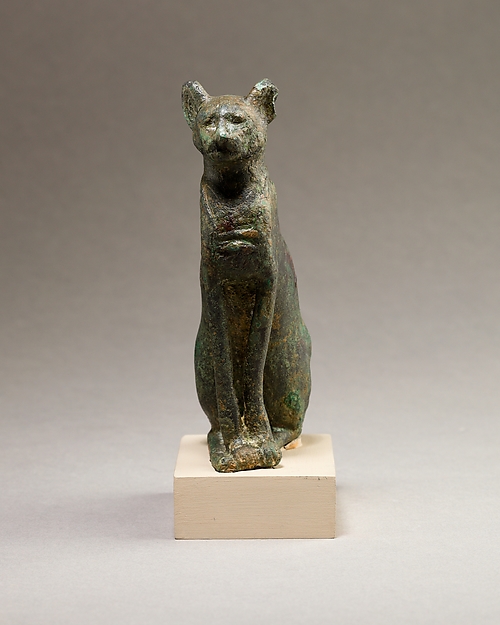
The ears stand upright. The front legs form a neat pair. A small amulet rests against the chest. Even on a screen, the seated figure has a presence that feels immediately recognizable to someone who lives with a cat. Then the label changes the encounter: this is an Egyptian metal object dated between 664 and 30 BCE, not a portrait of a modern pet.
The Metropolitan Museum of Art records it as Cat, object 04.2.812. Its modest scale matters: the figure is only about twelve centimeters high. A large photograph can make it seem monumental. Looking at the measurements brings it back into the world of objects people could handle, dedicate and place within a religious setting.
A familiar animal with a religious meaning
The Met links the figure to Bastet, a protective goddess of Lower Egypt who could be represented in feline form. The amulet on this cat is a wadjet eye, associated with protection and royal power. These details are part of the object’s meaning; they are more informative than treating the image as proof that every cat was worshipped in exactly the same way.
That distinction makes the encounter more interesting. A person can recognize the outline of an ordinary animal while understanding that the sculpture served a purpose beyond resemblance. The poised body and deliberate adornment ask us to look at what the maker chose to emphasize. This is a representation shaped for a setting, not a transparent photograph of daily life.
An offering is different from a household ornament
A second Met record, Cat Statuette, object 17.120.146, places this kind of figure within temple offerings and deposits associated with cat mummies. The museum explains that small cat figures could be dedicated at temples or placed in catacombs. Some larger hollow examples contained a cat mummy. The connection is religious and material, rather than simply decorative.
Imagine the difference between finding a small sculpture on a living-room shelf and encountering one in a burial context. The silhouette might look similar, but its surroundings change the questions. Who commissioned it? Where was it placed? What survives of that setting? Those questions cannot always be answered for an individual object, but they prevent us from filling every gap with a modern domestic story.
A mother and kittens tell another part of the story
The Met’s Cat with kittens on damaged box for animal mummy, object 29.5a, b, offers a different arrangement. Instead of a single upright animal, a reclining mother watches over kittens; one sits up while others nurse. The museum interprets their relationship through Bastet’s fertility, maternity and protective role.
The group rests on the surviving portion of a box that would have held a small mummy. An image that first appears tender is therefore also connected with an offering and a container. Both observations can be true. Recognizing the kittens does not require stripping away the religious context, and understanding the context does not prevent us from noticing the delicacy of the scene.
Compare the two compositions slowly: the upright guardian and the reclining mother. They are not interchangeable illustrations of one sentence about Egyptian cats. Their forms invite different ways of thinking about protection.
Three records to explore
- Cat, 04.2.812: look at the upright pose and wadjet amulet. How do adornment and posture work together?
- Cat Statuette, 17.120.146: read the record’s explanation of dedicatory uses. What does that context add to the familiar outline?
- Cat with kittens, 29.5a, b: notice the family group above the damaged mummy box. How does the container change your first impression?
Use the collection numbers when opening the linked records. Similar titles can refer to different objects, and a search for “Egyptian cat” can easily mix dates, materials and museum holdings. Keeping the number beside a note is a small habit that makes a later comparison much easier.
Leave room for what these objects cannot tell us
These works do not, by themselves, establish the first place cats were domesticated, the daily experience of every household or a pedigree connection to a present-day breed. Those are different questions needing different evidence. A convincing image is not automatically evidence for every claim attached to it.
The same care applies to the phrase “ancient Egypt.” The records here identify a particular date range; they do not stand for every period of Egyptian history. When sharing an image, include its title, collection and approximate date instead of reducing a long history to a universal statement.
It is also worth separating an ancient object’s date from the museum’s acquisition date. “Gift of Darius Ogden Mills, 1904” describes the modern collection history of the seated figure. It is not the date of its manufacture.
A quieter way to enjoy cat history
Try a short looking exercise before reading a label: name three visible details, then write one question. After reading the record, return to the image and see which details now seem more significant. Keep your own observation separate from the museum’s interpretation and from anything you are still wondering about.
You can do this with an online collection without turning the experience into a research assignment. One figure, viewed attentively, is enough for an enjoyable visit. Follow the related records when curiosity leads you there, and resist the need to extract a sweeping claim from every object.
The pleasure is in the combination: a cat’s recognizable form, a maker’s decisions and a historical meaning that asks us to look again. Familiarity opens the door; the details make the visit worthwhile.