The small gesture that travels well
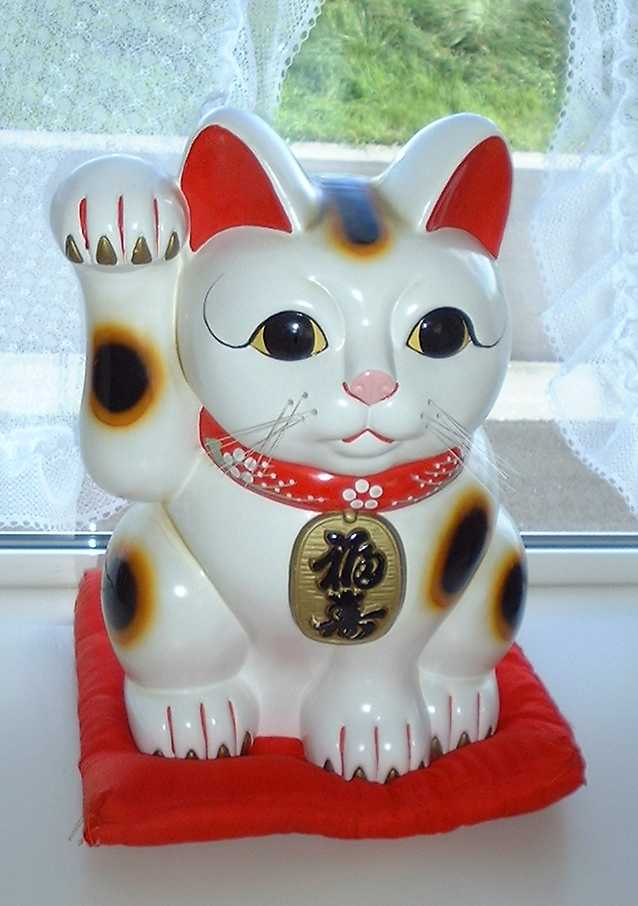
A cat sits upright with a paw held beside its head. You may have seen the shape in a restaurant window, on a shop counter or in a museum display. Its immediate friendliness can make it seem self-explanatory. Look a little longer and the differences begin: a painted bib, a bell, a rounder face, a higher paw or a surface with the character of handmade clay.
Maneki-neko is commonly translated as “beckoning cat.” Mingei International Museum describes the raised paw as a Japanese beckoning gesture and the figure as a good-luck object. That is a useful starting point: the cat is inviting, rather than simply waving hello in the sense many visitors first imagine.
A tradition with more than one visual language
SFO Museum’s exhibition account places the making of beckoning-cat figurines in the late Edo period. It describes later production across several pottery centers and the use of materials beyond ceramics. The name identifies a recognizable type of object, but it does not mean every example came from one workshop or followed a single template.
Mingei’s collection makes that variety particularly clear. Its exhibition descriptions include nineteenth- and twentieth-century examples made in clay, porcelain, stone, wood, metal and papier mâché. Differences in bells, bibs, paw heights and surface treatment give individual figures distinct characters.
It is tempting to search for the definitive lucky cat and rank everything else as a variation from it. A more rewarding approach is to compare the objects on their own terms. What has this maker emphasized? What does the material allow? Which details are modeled into the form and which are supplied by paint?
Enjoy the meanings without imposing a universal code
The figure belongs to a tradition of auspicious objects, often described with the Japanese term engimono. Museums connect it with hopes for good fortune and with the invitation extended to customers. The symbolism is cultural; describing it does not mean claiming that an object can guarantee a commercial or personal outcome.
Published explanations attach meanings to colors and to the choice of raised paw, but avoid assuming that every maker and setting uses an identical code. If a museum identifies a particular object or a maker explains a design, keep that context with the explanation. A color chart without a source can look more authoritative than the evidence warrants.
For the same reason, resist assigning a detailed personal wish to an unidentified figure. You can describe a gold surface or a painted coin without deciding exactly what its former owner hoped for.
Origin stories and surviving objects answer different questions
A memorable origin story can give a tradition emotional shape. It is not the same thing as a dated object or a documented workshop history. When an account is introduced as a legend, keep that word with it rather than presenting the story as a verified event.
For this introduction, the material evidence and museum accounts are enough: objects from different periods, made in different media, with recognizable shared features. They allow a useful conversation without choosing one appealing tale as the only origin.
This also keeps the history of the figurine separate from the history of cats in Japan. A date associated with ceramic production does not identify when living cats first arrived. Nor does the shape of a figurine prove the ancestry of a cat in a contemporary photograph. Art, folklore and animal history can meet without becoming interchangeable.
Look at two examples side by side
- Start with the paw. Which paw is raised, and how high? Look for an explanation of that specific gesture in the collection record.
- Look at the surface. Describe the visible clay, glaze, paint or other finish, then check which material the catalogue identifies.
- Notice the adornment. A bib, collar, bell, coin or inscription may reward a closer look. Use a supplied translation or explanation rather than guessing.
- Compare proportions. Is the figure round, slender, compact or elongated? Check whether the maker, kiln or regional style is recorded.
Do not worry about identifying everything immediately. “I can see a patterned bib, but I do not know what the inscription says” is a useful observation. It is a better starting point than guessing a translation because the overall figure looks familiar.
The tradition is large enough for a museum
Aichi Prefecture’s official tourism guide describes a museum in Seto devoted to maneki-neko, with thousands of examples and other feline art. The existence of such a collection is a reminder that this familiar shape rewards more than a quick souvenir-shop glance.
You do not need to plan a trip to appreciate the idea. An online exhibition can offer the same basic invitation to compare. Start with a small group and pay attention to the differences rather than counting how many examples you have seen.
If you do visit a collection, check its current official visitor information separately. An old exhibition page is a historical record of a display, not a promise that the same objects are still on view. The museum sources linked here include past exhibitions, which remain useful for their interpretation.
Let the next shop-window cat be a new encounter
The next time you notice a beckoning cat, look at one detail you would previously have passed over. Perhaps it is the shape of the eyes or the way the collar sits against the body. You do not need to touch the figure, photograph private premises without permission or turn the moment into a purchase.
If you collect these objects, keep any reliable information about the maker, date, material and place alongside them. A modest contemporary piece with a known maker can carry a more satisfying story than an “antique” offered without evidence.
The raised paw is a wonderfully accessible invitation. Accepting it means making room for the variety behind a familiar symbol: many objects, many hands and more to notice each time.