Aim for a usable home, not a hair-free photograph
You put on a dark coat, sit down for a moment and stand up wearing a little of your cat. The familiar finishing touch does not mean the whole house needs an emergency clean. It may mean that one favourite seat needs a more convenient routine.
This is a practical plan for ordinary loose fur on household surfaces. Begin with the places where it gathers and the fabrics you already own. You can make those places easier to maintain without buying a cupboard full of specialist tools.
Keep the goal specific: a comfortable sofa, a clean blanket and clothes you can leave the house in. Hair removal is separate from treating allergies or managing an infectious illness. If either is the issue, use appropriate professional advice rather than judging the result by how little fur you can see.
Choose the three places that matter most
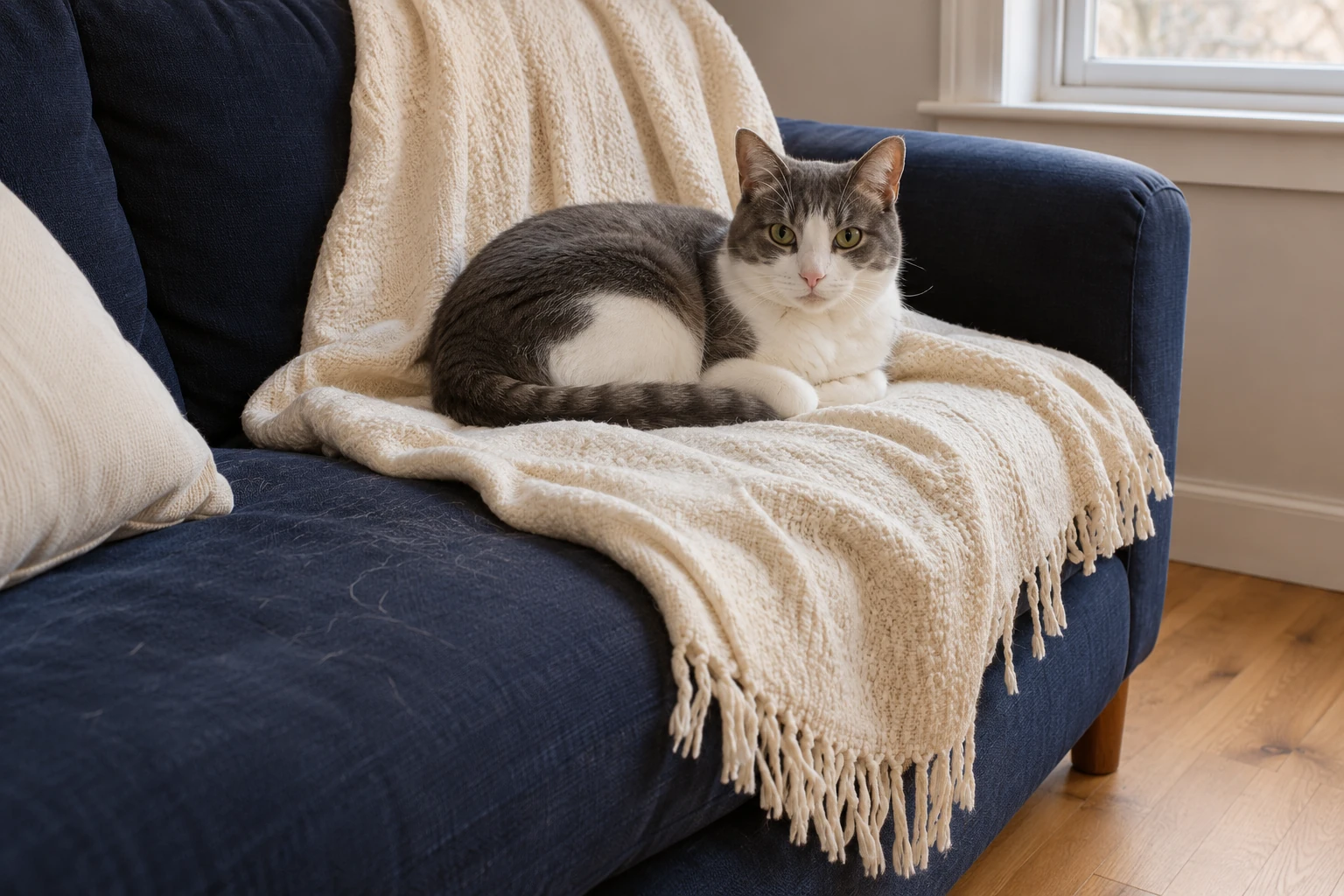
Walk through the home once and identify your highest-use spots. Perhaps they are the sofa cushion beside the window, the end of the bed and the chair where you put tomorrow’s clothes. Start with those, rather than treating every surface as equally urgent.
Notice the route between them. If clean laundry waits in an open basket on a favourite sleeping chair, putting it away sooner may save more work than adding another brush to your cleaning kit. If a throw slips off the sofa each day, a better-fitting washable cover may be more useful than a stricter schedule.
Write a short action beside each zone: remove loose fur, wash the removable cover, or move clean clothes into a closed cupboard. Assigning a job to a place makes it easier to begin and easier to stop when the useful work is done.
Let the care label choose the method
Check the manufacturer’s instructions before using any brush, roller, vacuum attachment or wet-cleaning method. A tool that works on one woven throw may snag a delicate fabric or mark another finish. Test an appropriate method on an inconspicuous area first.
For a sofa, begin with a compatible upholstery tool and work over the seams as well as the middle of the cushion. Remove collected hair from the tool as directed. Avoid pulling loose threads or pressing a rigid scraper into fabric simply because a video showed impressive results on a different sofa.
On a hard surface, use the cleaning approach recommended for that finish. Keep the task gentle and repeatable. If an item requires professional cleaning, follow that requirement; an improvised home treatment can turn an ordinary fur problem into an expensive repair.
Make the favourite spot easier to reset
A removable, washable layer can concentrate some of the work in an item you can actually maintain. Choose one that sits securely, suits the surface and does not leave loose cords or snagging edges around your cat. Introduce it without removing every familiar resting option.
Before washing, remove loose hair using a suitable method and follow the textile’s care label for detergent, temperature and drying. Check pockets and fastenings on human clothing. Clean the machine’s filters and the dryer’s lint screen according to their own instructions, rather than assuming the appliance will deal with everything indefinitely.
If you can, keep a spare compatible cover so the favourite place is available while the first dries. The useful upgrade is continuity: washing becomes a normal household task, not a reason the cat loses every resting spot at once.
Build a small reset into something you already do
Attach the fur-removal task to a routine that already happens. You might clean the main sitting cushion before folding the evening throw, or put fresh laundry away before making tea. Pick an action small enough that you can keep doing it on an ordinary day.
A more thorough pass can cover the areas that the quick reset misses: under removable cushions, behind a favourite chair and along accessible edges. Follow the furniture and appliance instructions when moving or cleaning anything. There is no need to dismantle an unsafe setup for the sake of a schedule.
- Frequent reset: deal with the main seat and put clean clothes away.
- Planned wash: rotate covers according to their labels and how dirty they are.
- Occasional review: check tools, filters and whether the chosen arrangement still works.
These are planning suggestions, not a hygiene standard or a promise that a fixed number of minutes will suit every household.
Keep cleaning products out of the experiment
Start with appropriate physical hair removal; loose fur does not automatically call for a disinfectant or a fragrance. When a cleaner is needed, follow both the product label and the surface instructions, including ventilation, rinsing and the time before pets can return.
The CDC distinguishes cleaning from disinfecting and emphasizes following labels. It specifically warns against phenol-containing disinfectants around cats. ASPCA Poison Control also stresses correct product use; a claim that something is natural is not a substitute for instructions.
Keep your cat away while you use products, and keep products and used materials inaccessible. Do not mix cleaners or apply a household cleaning product to your cat. If you suspect exposure to something harmful, contact a veterinarian promptly and have the packaging available.
Solve the awkward part instead of buying the whole aisle
If the routine keeps failing, identify the point of friction. Is the compatible brush stored too far away? Does the cover take too long to dry? Does one person clean the chair while another immediately puts an open laundry basket back on it?
A simple adjustment may help: store a suitable tool near the job, plan a cover wash when a spare is ready, or agree where clean laundry goes. Keep tools and supplies safely out of a cat’s reach. The aim is less repeated work, not more equipment on display.
Also allow your cat a quiet place while a vacuum or other noisy appliance is used. Avoid pursuing the cat from room to room as you clean. Finish one area and leave a comfortable option available rather than turning the whole home upside down at once.
Know when to change the question
A household routine can remove loose fur. It cannot explain bald patches, irritated skin, excessive grooming or a sudden change in the coat. Take those concerns to your veterinarian instead of simply increasing brushing or cleaning.
For everyday coat care, see the complete cat grooming guide. For the room itself, keep the routine that leaves the favourite seat comfortable and the laundry manageable. A home shared with a cat can look cared for while still looking lived in.