Give the familiar toy another afternoon
Somewhere under the sofa is a toy that once had a spectacular career. Nearby, a newer purchase may be enjoying a long, undisturbed retirement. Before adding another item to the basket, try gathering what you already own and looking at it with fresh eyes.
This weekend project is deliberately small: inspect the collection, choose a few suitable items and make a manageable rotation. Cats Protection recommends rotating toys, checking them for wear and keeping toys that could be swallowed or cause entanglement out of reach when a cat is unattended. Start with that safety check, then use the collection as material for a few pleasant experiments.
Empty the box before making a plan
Bring the toys to a clear surface away from your cat. Check each item in good light. Look for damaged seams, exposed stuffing, loose pieces, frayed attachments and anything that no longer resembles its original condition. Follow the manufacturer’s cleaning and use instructions. An item you cannot inspect properly need not earn a place in the new selection.
Put damaged toys aside for disposal rather than returning them to the bottom of the box. Keep storage containers and discarded pieces inaccessible while you work. Resist repairing a favorite with a loose ribbon or another addition that introduces a new hazard.
Next, separate items used only with a person from any suitable for independent use. A wand belongs in the supervised group, even if it is the most loved toy in the house. A rotation is a way to organize play; it does not change how an item should be used.
Make the first selection small enough to remember
Choose two or three intact options that offer different experiences. You might keep a suitable ball, a soft toy and a wand for a supervised game. Use what your own collection allows rather than buying an item to complete a category. Keep the remaining safe toys in closed storage out of reach.
There is no need to remove every familiar object at once. Leave a well-used favorite available if it remains suitable. The idea is to make the collection easier to use, rather than impose a rule that everything must disappear on a particular day.
For several cats, note who uses which item. A shared toy box can conceal individual preferences. Offer separate opportunities and enough space to move away; an apparent lack of interest may be hard to interpret when another cat is occupying the whole game.
Change one part of the game
A toy’s shape is only one part of an interaction. Where you offer it, how you move it and what else is happening in the room also change the experience. Try one modest adjustment at a time so you can remember what you did.
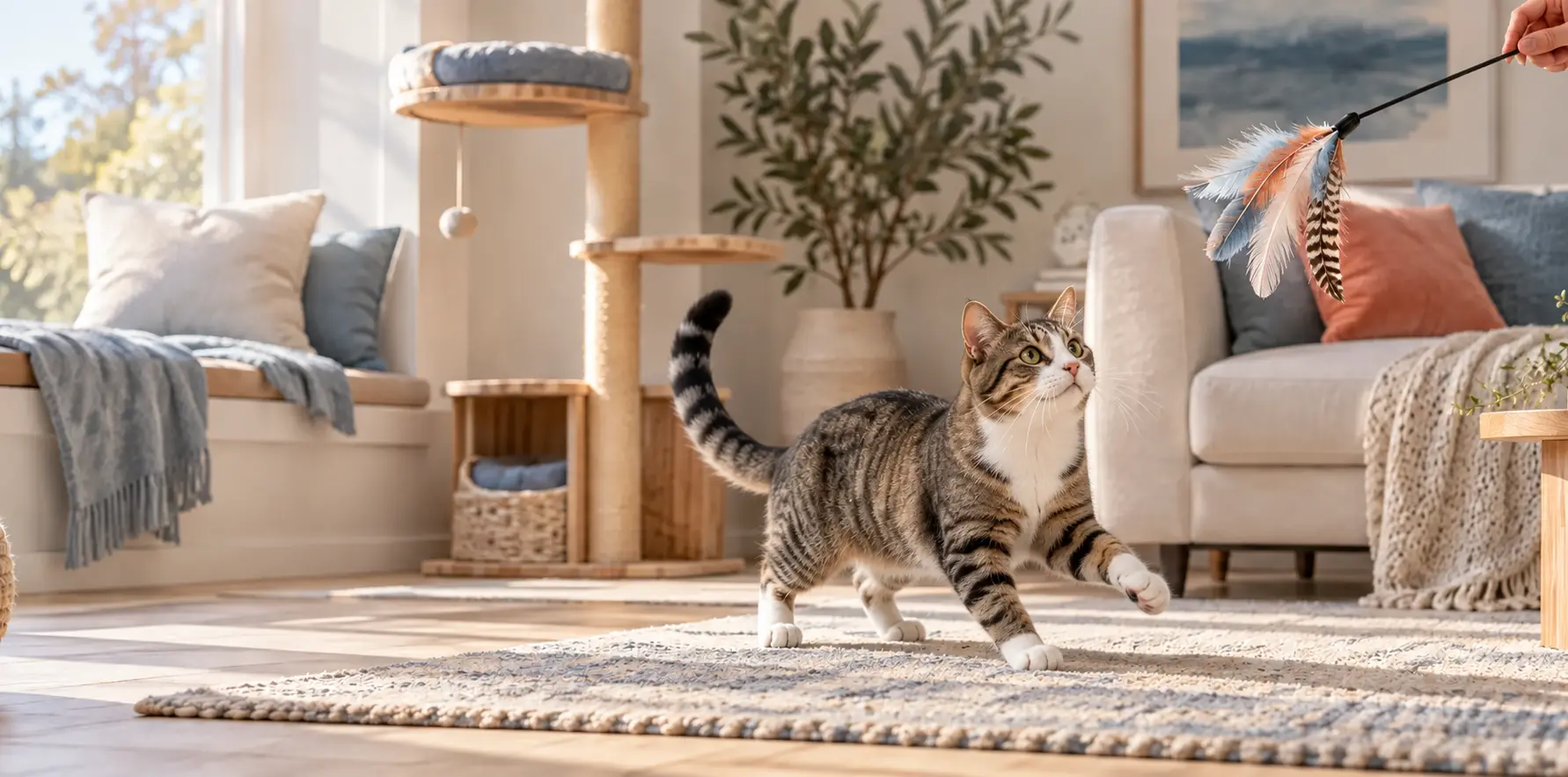
For a supervised wand game, for example, compare a brief movement along a clear floor with a slower movement partly behind a suitable object. Allow opportunities to catch the toy. Keep it away from your body so fingers and feet do not become the target. Stop when your cat disengages; a successful session does not need a dramatic finish.
Avoid turning the rotation into an exercise quota or a test your cat has to pass. This is a short project about offering choices. For a sudden change in activity or a cat that seems uncomfortable, speak to your veterinarian rather than trying to solve it by making the game harder.
Keep a note that takes less time than the game
- What you offered: for example, a soft ball on a clear hallway floor.
- What you changed: you rolled it gently instead of leaving it still.
- What happened: the cat approached, followed twice and then left.
- What comes next: offer it again another day; this observation alone gives you no reason to buy anything.
The example is fictional. Its purpose is to show the level of detail that helps: an item, a setting and an observation. “Hates all toys” is a much bigger conclusion than one quiet afternoon supports.
Use a phone note or a scrap of paper, whichever you will actually keep. A list with three useful entries beats an elaborate chart you abandon after the first session.
Find a rhythm your household can maintain
At your next check, swap one suitable item for another and inspect both. Choose a convenient moment already in your routine, such as tidying the room. You do not need a fixed seven-day cycle or a different set for every day of the month.
Store supervised toys immediately after use rather than waiting for the next scheduled change. Keep cleaning needs visible too: something waiting to be cleaned should have a separate place from the ready-to-use selection. That small distinction prevents an untidy storage box from quietly undoing the project.
If the selection becomes difficult to manage, reduce it. The rotation should make play easier to offer. It should not become another household system that demands constant attention.
Let the useful part of the project stay
After a few days, look back at the observations. Which items were easy to use safely? Which encouraged a game your cat chose to join? Which needed more cleaning or supervision than you had expected? Keep those practical answers alongside your preferences about how the toys look.
An ignored toy can stay in storage for another suitable opportunity. It need not trigger a shopping trip, and a well-used favorite does not become less valuable because it has appeared in several rotations. Familiarity and novelty can both have a place.
Finish by putting the next small selection where it belongs and the rest safely away. Then spend the time you saved on the part the storage system was meant to support: an enjoyable moment with your cat.