Write for the person arriving tomorrow
You know which cupboard holds the food, which cat prefers space and which door needs a second pull to latch. A sitter may know none of it. The purpose of a handover is to move those details out of memory and into a format another person can follow without a chain of messages.
This is a communication worksheet for care you have already arranged. It is not a way to leave a cat unattended, replace veterinary advice or decide that an automatic feeder can cover an absence. Cats Protection recommends at least twice-daily sitter visits, with some cats needing more frequent attention. Agree an individual schedule before departure; do not infer it from this worksheet.
Agree the actual service first
Confirm dates, visit times, time spent at the home, tasks and the backup arrangement. Ask about experience and references, and discuss any special care before booking. Humane World for Animals suggests asking about a sitter’s experience, services and response to emergencies. A friendly introductory message is not a substitute for a clear agreement.
Write down who is responsible for each visit if several people are involved. Avoid arrangements where everyone assumes somebody else has checked in. Record the time the first sitter visit is due and when the owner will resume care. Travel delays should not create an unassigned final day.
If medications or other clinical care are involved, confirm with your veterinarian and sitter that the plan is suitable and that the sitter can carry it out. Use the veterinarian’s current written instructions. Do not improvise doses, alternatives or missed-dose advice in a general handover article.
Put the essential page at the front
Begin with a dated summary and keep detailed notes behind it. Use each cat’s name consistently. In a multi-cat home, add clear identification notes or a current photograph so the sitter knows whose routine they are following. Separate individual instructions rather than writing “feed the cats normally.”
- Care period: specify the first visit, last visit and who resumes care.
- Each cat: give their name, identifying details and individual needs.
- Daily routine: write down food amounts and timing, water, litter and agreed interaction.
- Supplies: say where to find food, litter, cleaning supplies and carriers.
- Contacts: include the owner, local backup, regular veterinarian and emergency service.
- If plans change: agree who covers a missed visit or delayed return.
Fill the sheet with actual information, not reminders to yourself to add it later. Keep a paper copy in an agreed location and send a digital copy privately. Date both so the sitter can identify the current version.
Walk the route the sitter will use
Arrange an in-person introduction before the care period. Start at the entrance and let the sitter try the access method while you are there. Show how doors latch, where keys will be returned and what to do if access fails. Share security details privately; do not attach them to a public social post or a visible window notice.
Walk through one ordinary visit in order. Find the correct food, measure it using the actual scoop or scale, locate water bowls and demonstrate the agreed litter routine. Show where waste belongs and which cleaning products are intended for the task. Ask the sitter to describe the sequence back in their own words.
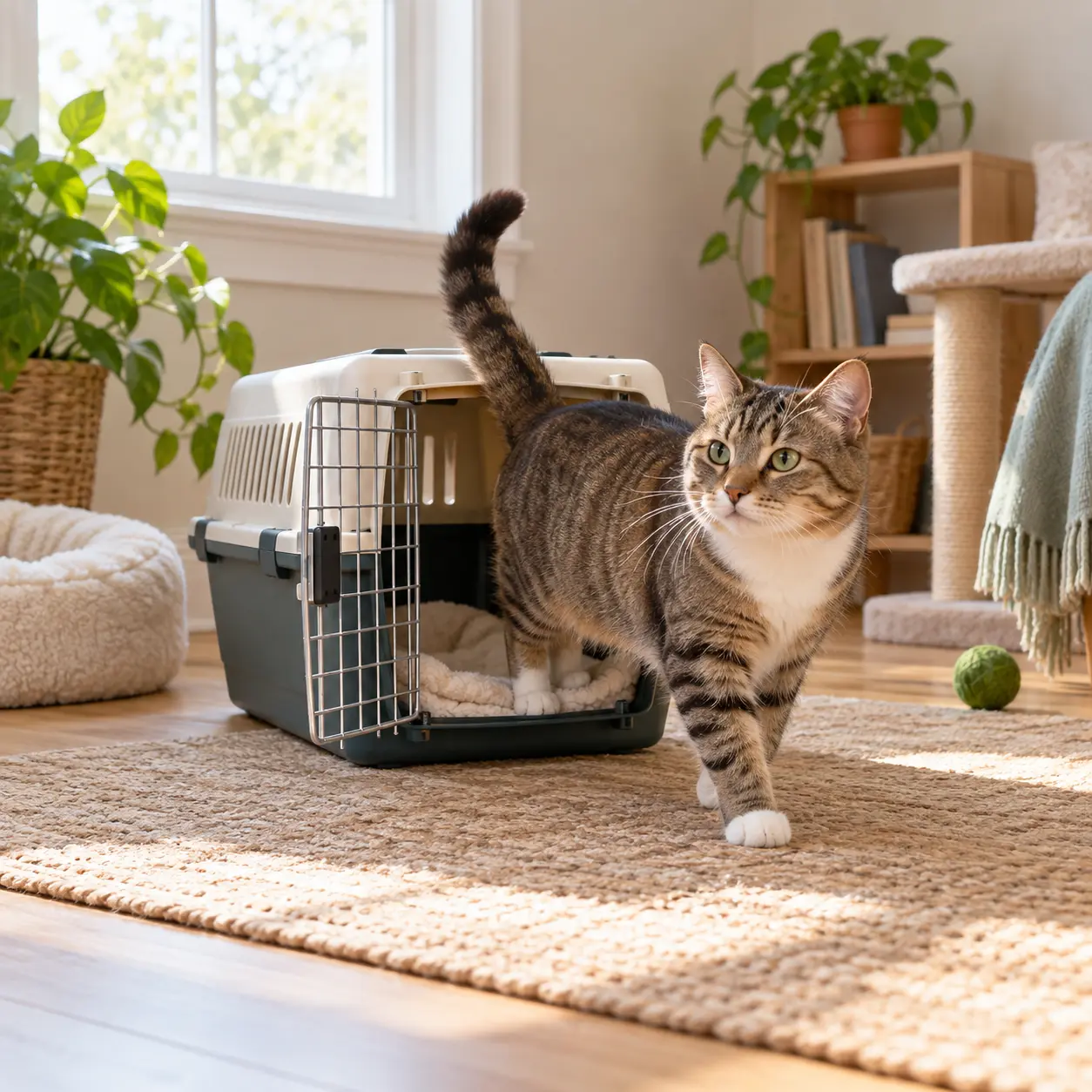
Point out places the cat commonly rests without promising that the cat will always be there. Explain your agreed door and window precautions. Confirm the carrier’s location and how emergency transport would work. A carrier hidden behind stored furniture is not practically available just because it is somewhere in the house.
Replace vague instructions with usable ones
“A little food” and “the usual amount” depend on knowledge the sitter may not have. Record the exact food and amount from the established feeding plan, the time and the correct bowl. Avoid changing diets or introducing new products immediately before leaving unless your veterinarian has directed a change.
For interaction, describe what you ordinarily do and what to avoid. “Let her approach; do not reach into her bed” is clearer than “she is shy.” Keep favorite play items available for supervised use as agreed, and store string or wand toys out of reach between sessions.
Distinguish routine preferences from instructions that require professional guidance. A note about a preferred resting spot is different from a medication direction. Put the medical record and veterinarian’s instructions together so the sitter does not have to assemble a care plan from scattered texts.
Agree what an update should contain
Choose a manageable reporting format before you leave. A short visit log might record arrival time, care completed and anything that differed from the usual routine. Agree how the sitter will confirm that each cat has been checked and what they should do if they cannot locate one. Do not make a posed photograph a requirement for a cat that prefers distance.
Set a primary contact route and a backup. Explain when a concern should go directly to the veterinarian or emergency service rather than wait for a reply from a different time zone. Confirm treatment authorization and payment arrangements with the clinic in advance, according to its policies.
A reporting plan should make problems easier to raise, not pressure the sitter to make every visit sound reassuring. Ask for factual observations, and thank them for reporting uncertainty promptly.
Rehearse once, then leave one current version
Before departure, check the dates, supplies, contact numbers and backup availability together. Remove outdated printed instructions. If a last-minute change is necessary, send a single revised version and ask the sitter to acknowledge it; do not rely on an amendment buried in an unrelated conversation.
After you return, confirm that you have resumed care and arrange key return as agreed. Ask what was hard to find or unclear. Update the document while those details are fresh, then keep it private for the next time.
A good handover is not the longest document. It is the one that allows another person to find the right instruction, understand their responsibility and get help without guessing.