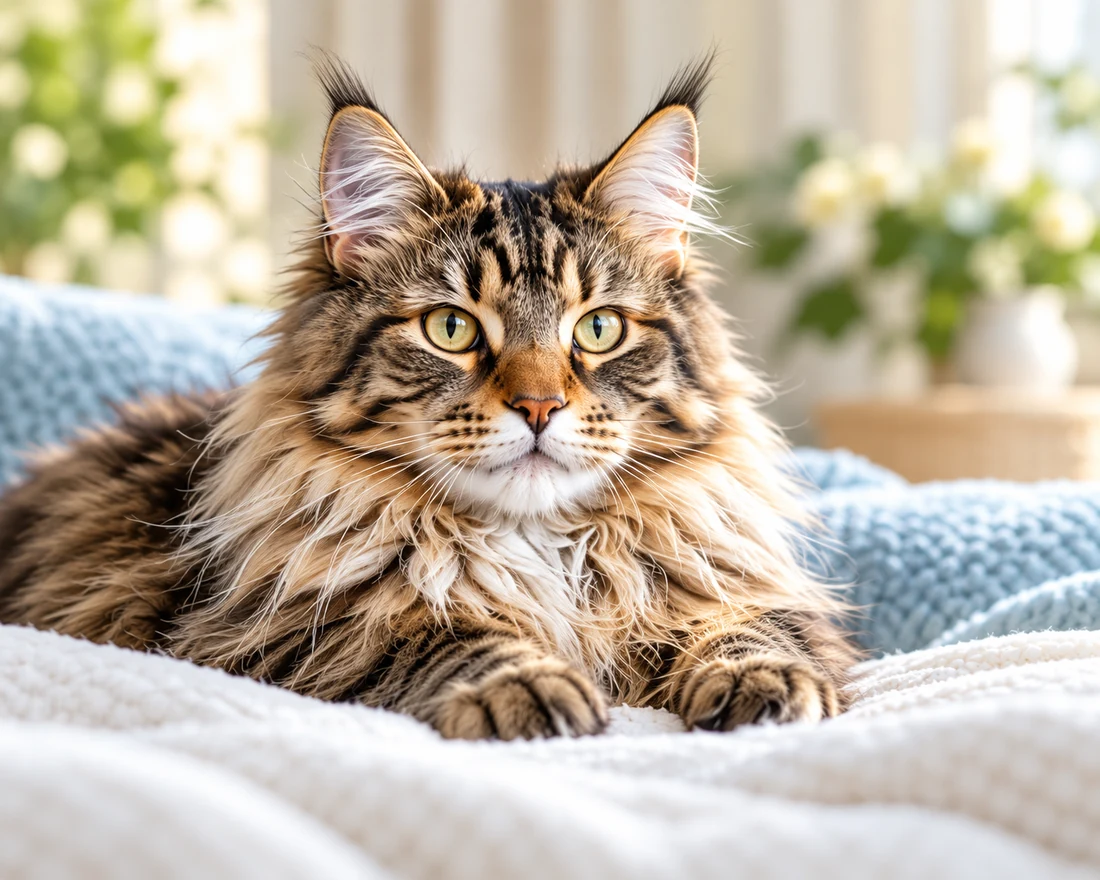
Look for the photograph already happening
A favorite portrait often begins with something unremarkable: a cat watching the room from a familiar chair, a chin resting on a blanket, or paws folded in a patch of soft light. The task is to notice the scene and make a clear picture of it. You do not need to invent a personality or persuade your cat to act one out.
This project uses the phone you already have. It does not depend on a particular camera model, editing subscription or accessory. Start with a resting cat in a familiar indoor setting and keep the session optional. If the cat leaves, the session ends. A photograph can wait.
Prepare yourself before approaching
Wipe the camera lens with a suitable soft cloth, check that you have storage available and open the camera before settling into position. Learn where your phone keeps its flash control so you can switch it off without experimenting beside the cat. Cats Protection advises avoiding flash because it may startle them.
Silence unnecessary camera sounds where your device allows. Leave straps, charging cables and loose accessories out of the cat’s space. You do not need a ring light positioned close to a face or a prop balanced over a resting spot. Work with what is already safe and comfortable in the room.
Decide what you want from this attempt: one head-and-shoulders portrait, one image showing the cat in its room, or one detail such as paws. Choosing a modest goal makes it easier to stop rather than keep trying for every possible picture.
Move your viewpoint, not your cat
Look for soft daylight already falling into the room. Cats Protection recommends natural light and tapping the screen to focus on the eyes. Try photographing from a position where the face is visible rather than placing a bright window directly behind it. Leave the window securely closed and do not create an outdoor session for the sake of this exercise.
If the light is unhelpful, wait for another opportunity or choose a different viewpoint. Avoid carrying the cat to a more attractive patch of light, moving a bed during a nap or using a toy to keep an unwilling subject in place. The comfortable moment is the material you are working with.
Look at the screen, then at the actual cat. A camera can hold your attention so completely that you miss the subject getting up or turning away. Keep enough distance that your phone does not become something pressed toward a nose.
Give the photograph one clear subject
Before pressing the shutter, check the edges of the frame. A chair leg appearing behind an ear or a bright laundry bag can compete with the face. Often a small move to one side solves the problem without changing anything around the cat.
Try a viewpoint near the cat’s eye level if you can reach it comfortably and safely. Keep your own balance; do not perch on unstable furniture. Compare a wider frame that includes the resting place with a tighter frame that emphasizes the face. Neither is automatically better: they tell different parts of the same small story.
- Try a room view to show where the cat has chosen to settle. Keep the background simple enough to read.
- Try a portrait with the face as the main subject. Check the focus and avoid cutting awkwardly across the ears.
- Try a detail such as paws, whiskers or a familiar posture. Include enough context for the detail to make sense.
Use these as possibilities across different days. They are not a shot list your cat needs to complete in one sitting.
Take a few pictures, then pause
Tap the face or eye area to place focus where your phone supports it. Keep your hands steady and take a small group of pictures. Review them away from the cat rather than repeatedly leaning in to check and returning for another attempt.
Enlarge one image enough to inspect the eyes and whiskers. A picture can look sharp as a small thumbnail and soft when opened. If everything is blurred, stabilize your own position or wait for a brighter moment. Do not assume a new device is the first solution.
Compare similar frames by asking one question at a time. Which has the clearer expression? Which has the less distracting background? Which includes the paws if that was your aim? A deliberate choice between three images is usually more useful than scrolling through hundreds without knowing what you are looking for.
Edit lightly and keep the original
Save the original before making edits. Start with a modest crop and small brightness adjustment if needed. Check that dark fur still has detail and white fur has not become a featureless patch. Excessive sharpening can make whiskers look harsh; heavy filters can change coat colors.
For a personal portrait, an expressive edit is a creative choice. For a rescue profile, identification image or factual record, keep the cat’s appearance accurate and follow the organization’s image requirements. Do not remove identifying markings, invent eye colors or use a generated replacement as a documentary photograph.
Before sharing, inspect the background for addresses, documents, reflections and other people. Ask permission before posting someone else or their home. A lovely portrait does not need a location tag or private details to be worth keeping.
Make a collection you can actually enjoy
Choose one favorite, give it a useful filename and store it somewhere you can find again. Add the date and a short ordinary memory if you like: the chair, the afternoon or the familiar way those paws were folded. Preserve a backup rather than assuming a social account is an archive.
Try this again in a different season or room, without trying to reproduce the first image exactly. Over time, a few attentive photographs can tell more about your cat than a gallery of staged scenes.
Your stopping rule is simple: once you have an image you enjoy—or the cat has had enough—put the phone away. The pleasant part of the project is sharing an ordinary moment, including the part that never becomes a picture.